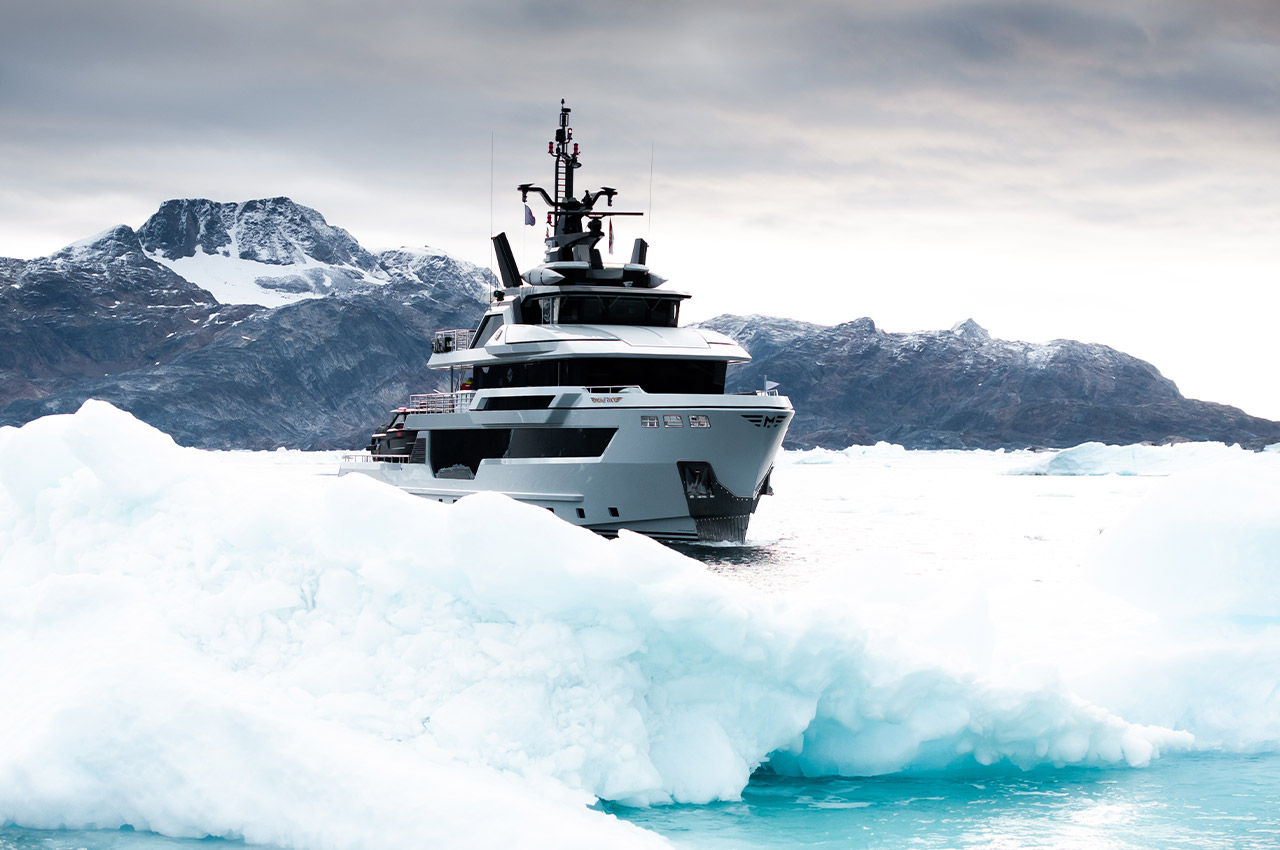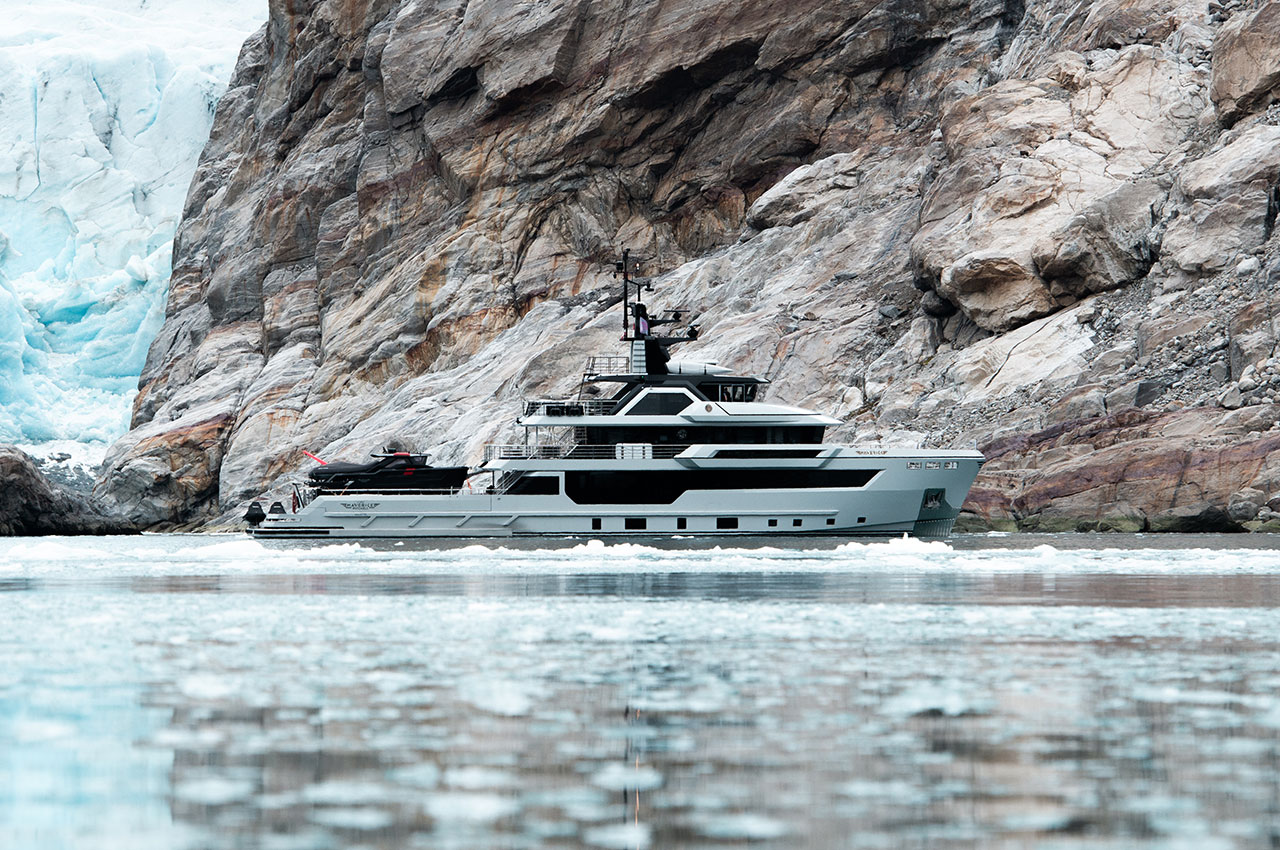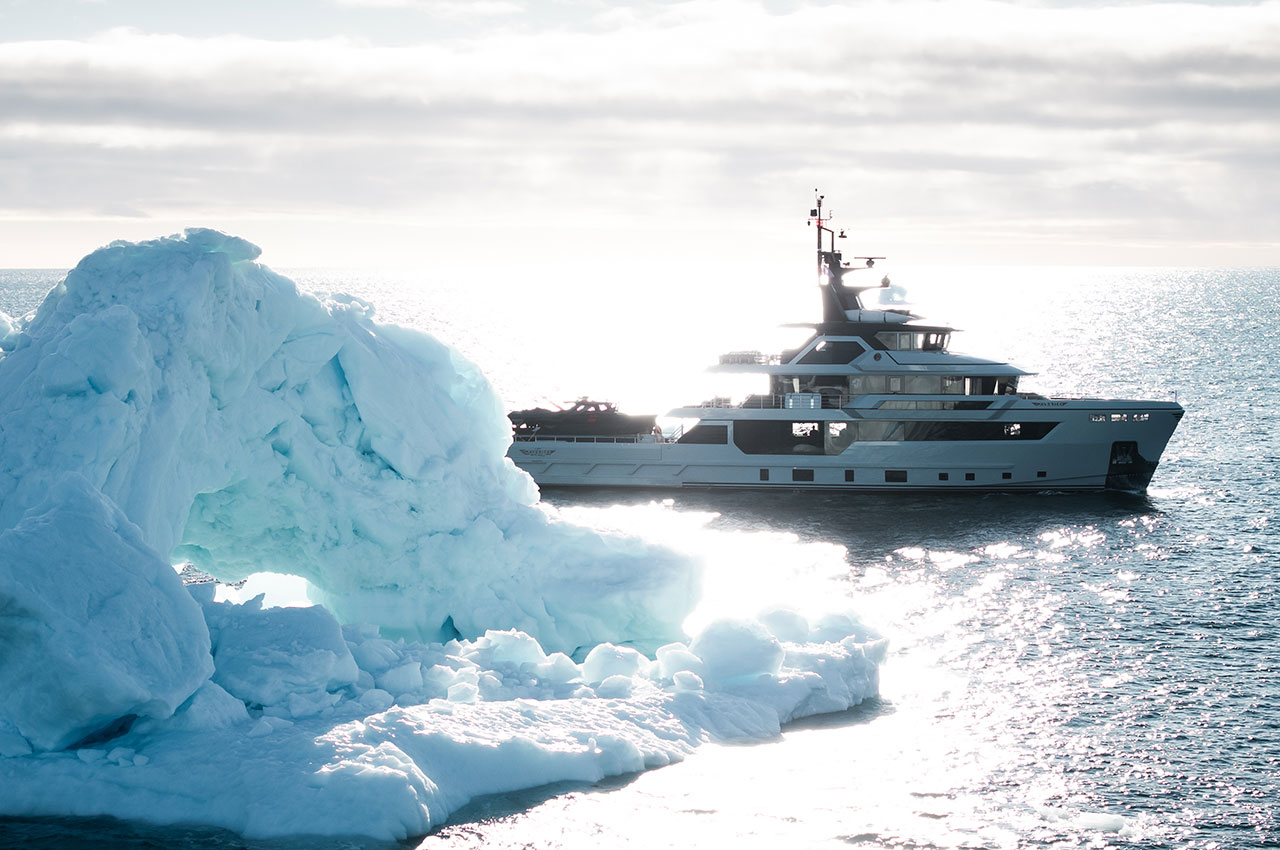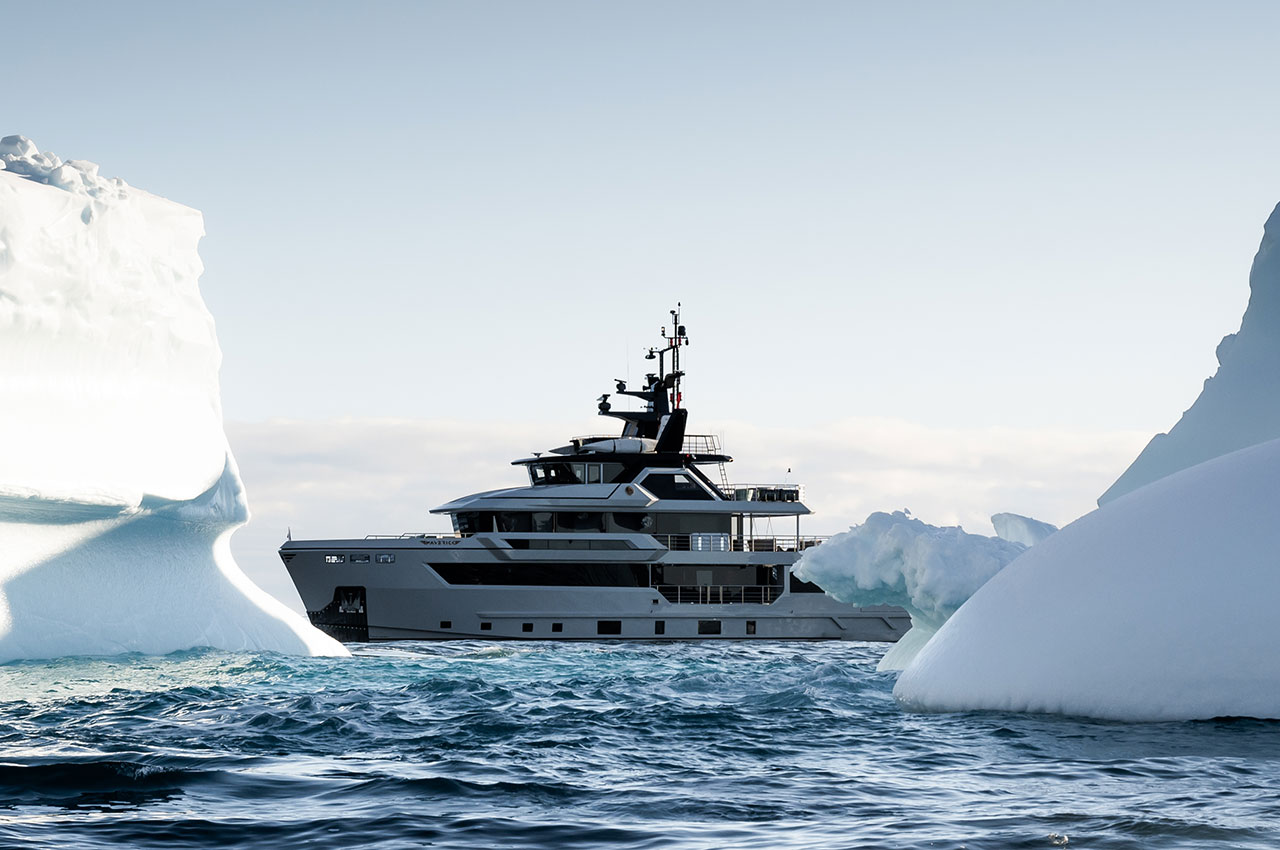
Steering through the ice
Interview with Capt. Oliver Michels, by Maria Roberta Morso
Since Maverick has been operating continuously since her delivery in Spring 2024, two Captains take command in alternating shifts: Capt. Guy Perkins and Capt. Oliver Michels who took over at the Svalbards and was in charge for almost 90% of the journey in the arctic seas. We asked him a few questions to better understand what was like to be at the helm of an explorer yacht in those extreme areas of the world.
MRM: What are the main technical characteristics that make Maverick fit for such a challenging world tour?
Capt. Oliver Michels: First of all, a robust, well-balanced steel displacement hull with a 12mm thick reinforced ice-belt: when navigating through fields of small ice or brushing against larger floes, the hull's reinforced plating acted like an armored shell, preventing punctures and minimizing deformation. Its load-bearing frames and ribs added internal rigidity, allowing the yacht to withstand both direct impacts and the constant pressure exerted by shifting ice.
Other indispensable features are great storage areas for consumables, provisioning and, last but not least, garbage, which we seal air and watertight. The famous A-frame crane allows us to store and handle our 9.5m chase-boat Iceman on the aft deck that is pretty awesome. And, in general, a well-equipped Bridge, because after all we operate under a full commercial code.
MRM: How was Maverick specifically engineered and outfitted for safe and efficient navigation in northern waters? I've been told that the shipyard, among other things, prioritized system reliability in harsh, icy environments with reinforced water intake designs to prevent freezing and blockage. Seawater intakes, sea chests, have been built to prevent them from becoming blocked by ice. These features are critical for maintaining essential engine and system cooling water flow when operating in polar regions. Can you add another system peculiarity?
Capt. Oliver Michels: For example, the production of water, through our Idromar water-maker plant which is fitted with a custom designed pre-heating system in order to increase production of fresh water.
MRM: What specific navigational challenges do you encounter when operating in high-latitude regions, such as near the poles, and how do you adapt your approach?
Capt. Oliver Michels: The biggest navigation challenges were to compensate for the lack of reliable nautical charts, which leaves you with an unknown bathymetry. There are a few mapping softwares on the market, the most reliable ones come from the fishing industry, like the OLEX system.
As a constant challenge was represented by the vicinity of floating ice near the vessel or our route, good look-out and watchkeeping was or paramount importance. Here again, modern electronics helps a lot, like good radars & SEA-AI thermal cameras for both long and short-range ice detection, which gave us an extra layer of safety.

MRM: How do factors like ice charts affect route planning and decision-making at extreme latitudes?
Capt. Oliver Michels: Ice charts play a vital role in arctic regions voyage planning. We used a program called icysea.app which provides on a frequent daily base updated satellite images of the pack-ice and any other drifting icebergs, bergy-bits or growlers. Of course, the best images of the ice is only as good as the Navigator who needs to interpret the data. We as Maverick crew followed an advanced Polar Navigation course that provided the necessary training and skills for the safe conduct of navigation in polar waters, knowledge of safety and emergency aspects included. But we had also a first class Ice-pilot Captain Oliver Michels Charbel Daher permanently onboard which opened up another level of possibilities approaching the ice. Every day we learned hips about the region and our fine explorer yacht that proved to be up to the task.
MRM: What were the most difficult decisions you faced during the journey, and how did you resolve them?
Capt. Oliver Michels: We spent an extended time in arctic waters, into early Autumn which brings stronger winds into the region therefore it was necessary to adhere strictly to the indication that comes from weather forecasts. It is always important and even more when we were crossing in the Arctic and Labrador Sea. The most delicate choice I made was selecting the right course and location to avoid hurricane Melissa. It was a choice that I made with the highest care, and I want to thank the Owners for their trust in me!